

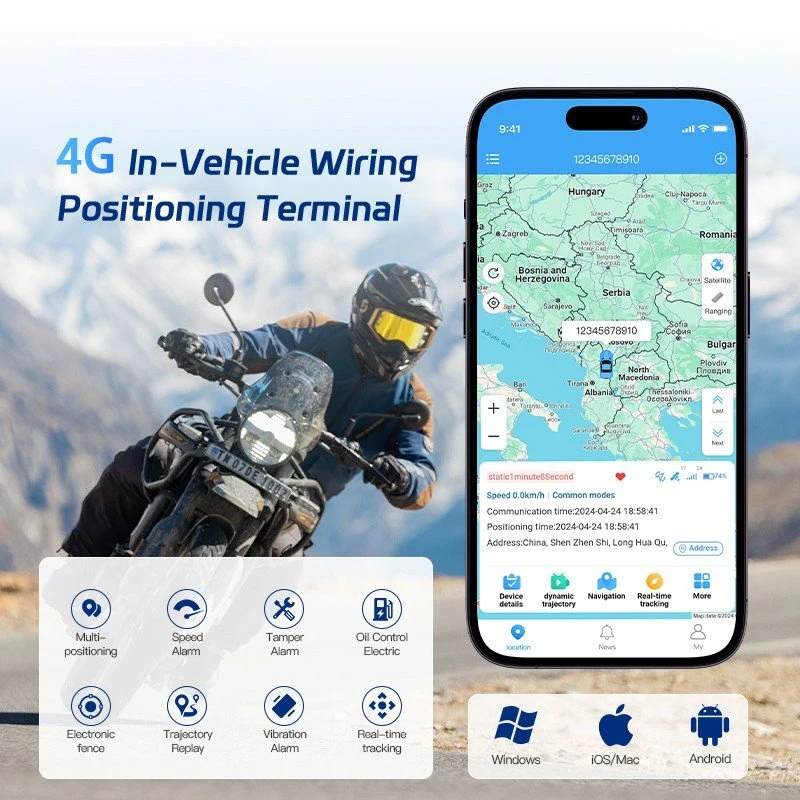
Vehicle positioning devices are essential tools in modern traffic management. By combining satellite positioning with communication technology, they enable the real-time acquisition of data such as vehicle location and travel trajectories. As a specific category of these devices, 4G hardwired in-vehicle positioning terminals utilize built-in high-precision positioning modules and multi-band communication capabilities to provide technical support for applications like fleet management and safety monitoring. Their core functions include real-time tracking, route playback, and geofencing alerts, making them suitable for logistics, fleet operations, and the protection of personal vehicles.
I. Technical Principles and Core Components:
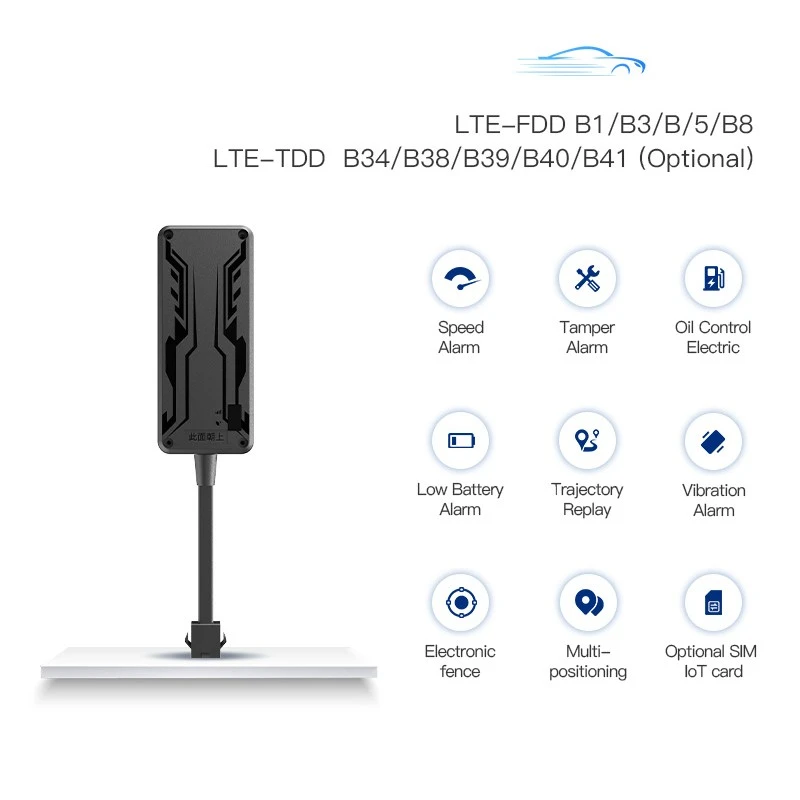
The device is powered by a dual-mode BeiDou/GPS positioning chip, which achieves high-precision tracking-with an accuracy of less than 2 meters (2DRMS)-by receiving signals from multiple satellite systems. Its communication module supports both 4G and 2G standards, covering FDD-LTE, TDD-LTE, and GSM frequency bands, ensuring reliable data transmission even in remote areas or environments with weak signal coverage. The unit features an integrated 60mAh industrial-grade lithium-polymer battery and supports a wide input voltage range (9–90V), allowing for direct connection to a vehicle's power system. With a standby current of less than 5mA, it balances low power consumption with the need for continuous operation. The device employs an integrated antenna design-combining GPS and 4G LTE antennas-which minimizes external interference and enhances the unit's seal; it carries an IPX5 waterproof rating, providing protection against everyday rain and splashes.
II. Usage and Application Scenarios:
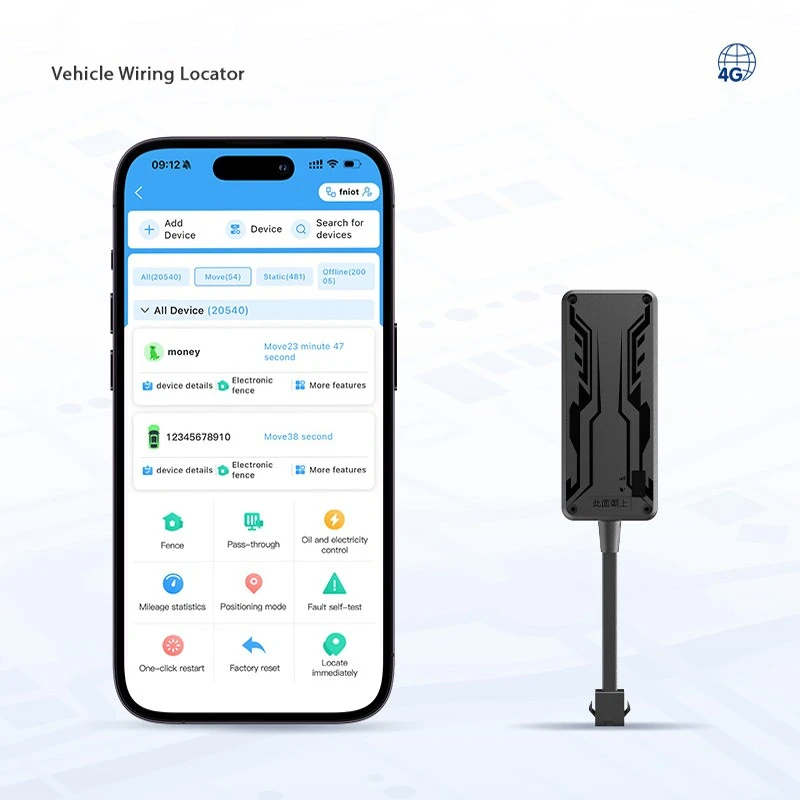
Installation is straightforward: the device is activated simply by connecting it to the vehicle's power supply. It requires 32 seconds for an initial fix (cold start) and only 1 second for a warm start, ensuring rapid positioning as soon as the vehicle is started. Users can monitor real-time locations and historical routes, or set up geofences-triggering alerts if a vehicle moves outside a predefined area-via a dedicated platform or mobile app. Designed to operate in temperatures ranging from -20°C to +70°C, the device is capable of withstanding extreme climate conditions. Its lightweight, 39-gram design facilitates discreet installation, reducing the risk of tampering. It is well-suited for a variety of vehicle types, including freight trucks, ride-hailing vehicles, and private cars, and is particularly effective for scenarios requiring long-term monitoring or cross-regional transport.
III. Technical Highlights and Real-World Performance:
Compared to traditional positioning devices, this terminal offers significant improvements in both positioning speed and stability. By integrating signals from the BeiDou and GPS satellite systems, its dual-mode positioning chipset maintains continuous tracking even in obstructed environments, such as tunnels or areas beneath elevated roadways. Multi-band communication support prevents signal interruptions caused by congestion on any single network, ensuring the real-time transmission of data. An industrial-grade battery combined with a low-power design extends the device's operational lifespan, reducing the need for frequent recharging or battery replacement. Furthermore, the device employs hardware-level encryption for data transmission, which mitigates the risk of information leakage and ensures compliance with the data security standards required by the transportation industry.